
Best Add-Ons to a GLP-1 Plan
What are the best add-Ons to a GLP-1 Plan, and which one fits me?
Reviewed by Taylor Anderson, RN
Aesthetic Registered Nurse
Taylor Anderson is an aesthetic registered nurse and a reviewer for Hot or Nothing.
Updated October 11, 2026
Quick answer
The best add-ons to a GLP-1 plan like semaglutide or tirzepatide are enough protein and strength training two to three times a week, because these drugs take muscle along with fat. Keeping that muscle is what leaves you lean and lifted instead of smaller and softer. After that, pick your next add-on by what you see changing: a retinoid such as tretinoin for looser or drier skin, nutrition and an early hair plan for shedding, and smaller protein-first meals for nausea.
In this guide
Key takeaways
- Protein and strength training come first on a GLP-1, because semaglutide and tirzepatide take muscle along with fat, and the muscle you keep is what leaves you toned instead of only smaller.
- Aim for more than 1.2 grams of protein per kilogram of body weight a day (a bit over 84 grams for a 154 lb woman), spread across meals at about 25 to 30 grams each, and use a shake when your appetite won't let you get there with food.
- Lift two to three times a week, working your major muscle groups, and keep walking, but walking doesn't replace lifting for holding on to muscle.
- Match your next add-on to what you see changing: ask about tretinoin if your skin looks looser or drier, and tell your clinical team early if you're shedding so you can start a hair plan.
- If nausea makes eating hard, eat smaller meals with the protein first, add fiber and fluids, and tell your clinical team if side effects keep getting worse.
The best add-ons to a GLP-1 plan like semaglutide or tirzepatide are enough protein and strength training two to three times a week. These drugs take muscle along with fat, and keeping that muscle is what leaves you lean and lifted instead of smaller and softer. Once those two are in place, choose your next add-on by what you see changing:
- If your skin looks looser or drier, ask about a retinoid such as tretinoin.
- If you're shedding, focus on nutrition and start a hair plan early.
- If nausea is stopping you from eating enough, switch to smaller meals and eat the protein first.
What should I add to my GLP-1 plan first?
Add protein and strength training first. A 2024 Obesity Reviews paper on muscle loss during GLP-1 treatment says everyone taking these drugs for weight loss should follow a program built on enough protein and resistance training to keep muscle mass and function.
In the large trials, people lost 10% or more of their muscle mass over 68 to 72 weeks. That's about what 20 years of aging would take. An analysis of lean mass on GLP-1 therapies found that about a quarter of the weight lost was lean mass. Semaglutide 2.4 mg and tirzepatide 15 mg weekly did the least to protect it. The drug takes the fat off, and your protein and lifting decide how much muscle you keep.
For a woman in her 30s, 40s or 50s, this decides whether you end up smaller or toned. Muscle gives your arms, legs and butt their shape, and age is already taking some of it.
One scan result is no reason to panic. A 2026 review on keeping muscle during GLP-1 treatment points out that lean mass loss on a DXA scan (the body composition scan used in these studies) isn't the same as clinically significant muscle loss. The goal is to keep your strength and your shape.
How much protein and strength training do I need on a GLP-1?
- Eat more than 1.2 grams of protein per kilogram of body weight a day. That's the target a global consensus group set for people on GLP-1 therapies, according to this review. For a 70 kg (154 lb) woman, that's a bit over 84 grams a day.
- Spread it out, at about 25 to 30 grams per meal. In a week-long feeding study, people ate about 25 to 30 g of protein at each of breakfast, lunch and dinner. Their muscle protein synthesis (how your body builds and repairs muscle) rose by 25% compared with a pattern that piled most of the protein into one meal.
- Use a shake when your appetite won't cooperate. Shakes and other nutrition supplements can help if you can't meet your protein needs from food. No current guidelines recommend protein beyond what you need, so a shake fills the gap. It isn't a bonus.
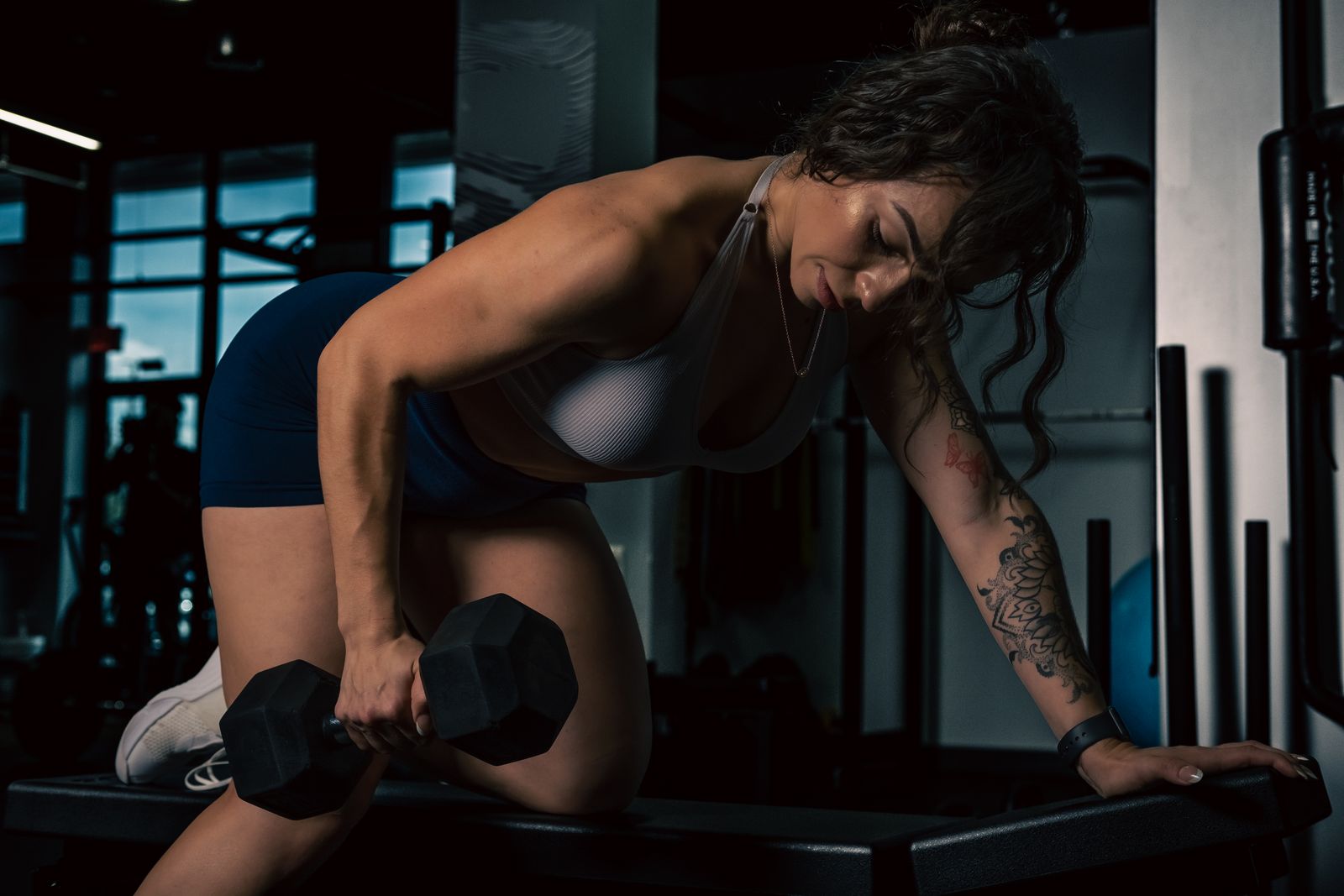
- Lift two to three times a week. The 2026 review recommends a minimum of two to three resistance sessions a week that work your major muscle groups. If you're training on your own while you get used to your dose, two sessions is more realistic and more likely to stick.
- Keep walking, but don't count it as lifting. During calorie cutting, resistance training and mixed training kept more lean mass than cardio alone. For holding on to muscle, the review says lifting can't be swapped for other exercise.
- Lifting can do more than slow the loss. In a small case series, three people on semaglutide or tirzepatide lifted 3 to 5 days a week. Two of them gained lean tissue (2.5% and 5.8%) while losing 26.8% and 13.2% of their body weight. The third lost lean tissue, 8.7% of her total weight loss.
- Make it part of your routine. One woman who lost 77.4 lbs over 16 months on Zepbound wrote in r/Zepbound that she had "Very few side effects and am very conscious of getting enough protein and drinking water."
Which GLP-1 add-on fits what I'm seeing change?
Start with the change that bothers you most. Ask your clinical team about the add-on in that row. The survey figures below come from adults in a telemedicine weight program who lost 10% to 20% of their body weight.
| What you notice | Add-on to ask about | Why |
|---|---|---|
| Weaker arms and legs, or a softer look | Protein at every meal plus lifting 2 to 3 times a week | 19% of the survey group reported reduced strength. |
| Looser skin, a hollower face, or drier skin with more fine lines | A retinoid such as tretinoin, plus enough protein and nutrients | 44% reported sagging skin and 37% reported less facial volume. The authors list retinoids and micronutrient support among ways to protect skin quality. |
| More hair in your brush or shower drain | Nutrition support and an early talk about a hair plan | 30% reported hair loss. The authors suggest starting hair growth treatment early and say the shedding may be temporary with enough nutrition. |
| Nausea that makes eating hard | Smaller meals with the protein first, plus fiber and fluids | Current guidance supports smaller meals, eating slowly, protein first, softer or less fatty foods while you're nauseous, and drinking between meals instead of with them. |
| Worry about your bones | Strength training | In the only randomized trial to test this with a GLP-1 (liraglutide, an older drug), people on the drug alone lost bone density in the hip and spine, while the groups that also exercised kept theirs. Semaglutide and tirzepatide weren't tested. |
What can I do about my face, skin and hair on a GLP-1?
Sagging skin, a thinner face and shedding are common on these drugs, and they get more common the more weight you lose. In the same telemedicine survey, sagging skin, hair loss, lost facial volume and reduced strength all rose significantly as the share of weight lost went up.
About a quarter of respondents (24.1%) said their skin got worse, including dryness, wrinkles or fine lines. The authors think eating less protein and fewer micronutrients, because your appetite is lower, may play a part. So your protein habit helps your skin too.
For skin, the authors list several options:
- retinoids
- antioxidants
- micronutrient support
- hyaluronic acid microdepot injections (tiny filler-like deposits under the skin)
- energy-based procedures
Tretinoin is a prescription retinoid that you put on at home. Our clinical team can prescribe it if it fits your goal.
Shedding on a GLP-1 may be telogen effluvium, a temporary shed that can follow a big change to your body. Eating less can leave you short on nutrients, and that may speed up the hair loss. The authors say the shedding may be temporary with enough nutrition, so tell your clinical team as soon as you notice it instead of waiting it out alone. Hot or Nothing's hair plans include minoxidil and GHK-Cu copper peptide, and your clinical team can tell you whether either fits.
It's easier to plan for this from the start than to react once you see it. The survey authors say that spotting likely skin changes early lets clinicians start skincare, hair growth and muscle-building routines before the changes show up.
What if nausea makes it hard to eat enough protein on a GLP-1?
Nausea, constipation and diarrhea are the most common side effects, and they're a leading reason people stop. These steps help:
- Raise your dose gradually.
- Eat about 14 grams of fiber for every 1,000 calories.
- Drink more than 2 to 3 liters of fluid a day.
When your appetite is small, eat the protein on your plate first, so the part that protects your muscle gets eaten before you feel full. The 2026 review lists protein-first meals among the practical ways to keep your protein, energy and fluids up while your stomach is acting up.
If side effects keep getting worse instead of settling, tell your clinical team rather than pushing through. They can change how quickly your dose goes up and, when needed, prescribe short-term anti-nausea medicine so you can keep eating enough to protect your muscle.
You want to finish your GLP-1 plan leaner and more toned, not only smaller. Take the quiz so your clinical team can build a plan around your weight goal and the changes you most want to protect against, like your skin, hair or strength.
Ready to make a move?
Answer three questions to see the treatment options that fit your goals.
See My PlanFAQ
Can you lose weight on a GLP-1 without losing muscle?
You can keep much more of your muscle if you eat enough protein and lift regularly. Semaglutide and tirzepatide take some muscle along with fat, so protein at every meal and strength training two to three times a week are the first add-ons. In a small report on three people taking these drugs who lifted 3 to 5 days a week, two gained lean tissue while losing weight and one lost some.
Does hair loss from semaglutide grow back?
It may. Shedding on a GLP-1 can be telogen effluvium, a temporary shed that can follow a big change to your body, and researchers say it may be temporary with enough nutrition. Tell your clinical team as soon as you notice it so you can talk early about a hair plan, such as minoxidil or GHK-Cu copper peptide.
Do I need protein shakes on tirzepatide?
Not always. A shake helps when your appetite is too small to get enough protein from food, but no current guidelines recommend protein beyond what you need. Aim for more than 1.2 grams per kilogram of body weight a day, spread across meals, and use a shake to fill the gap.
Does walking count as strength training on a GLP-1?
No. Walking is worth keeping up, but during calorie cutting, resistance training kept more lean mass than cardio alone. Aim for two to three lifting sessions a week that work your major muscle groups, and start with two if you're training on your own while you get used to your dose.
Keep reading
Sources (5)
- Strategies for minimizing muscle loss during use of incretin-mimetic drugs for treatment of obesity · onlinelibrary.wiley.com · captured October 10, 2026
- Lean Mass and Musculoskeletal Preservation in GLP-1-Based Obesity Treatment: Nutrition, Exercise, Supplementation, and Monitoring Strategies · mdpi.com · captured October 10, 2026
- Optimizing GLP-1 therapies for obesity and diabetes ... - PMC · pmc.ncbi.nlm.nih.gov · captured October 10, 2026
- Preservation of lean soft tissue during weight loss induced by GLP-1 and GLP-1/GIP receptor agonists: A case series - PMC · pmc.ncbi.nlm.nih.gov · captured October 10, 2026
- r/Zepbound: Slow and Steady wins the race · reddit.com · captured October 10, 2026