
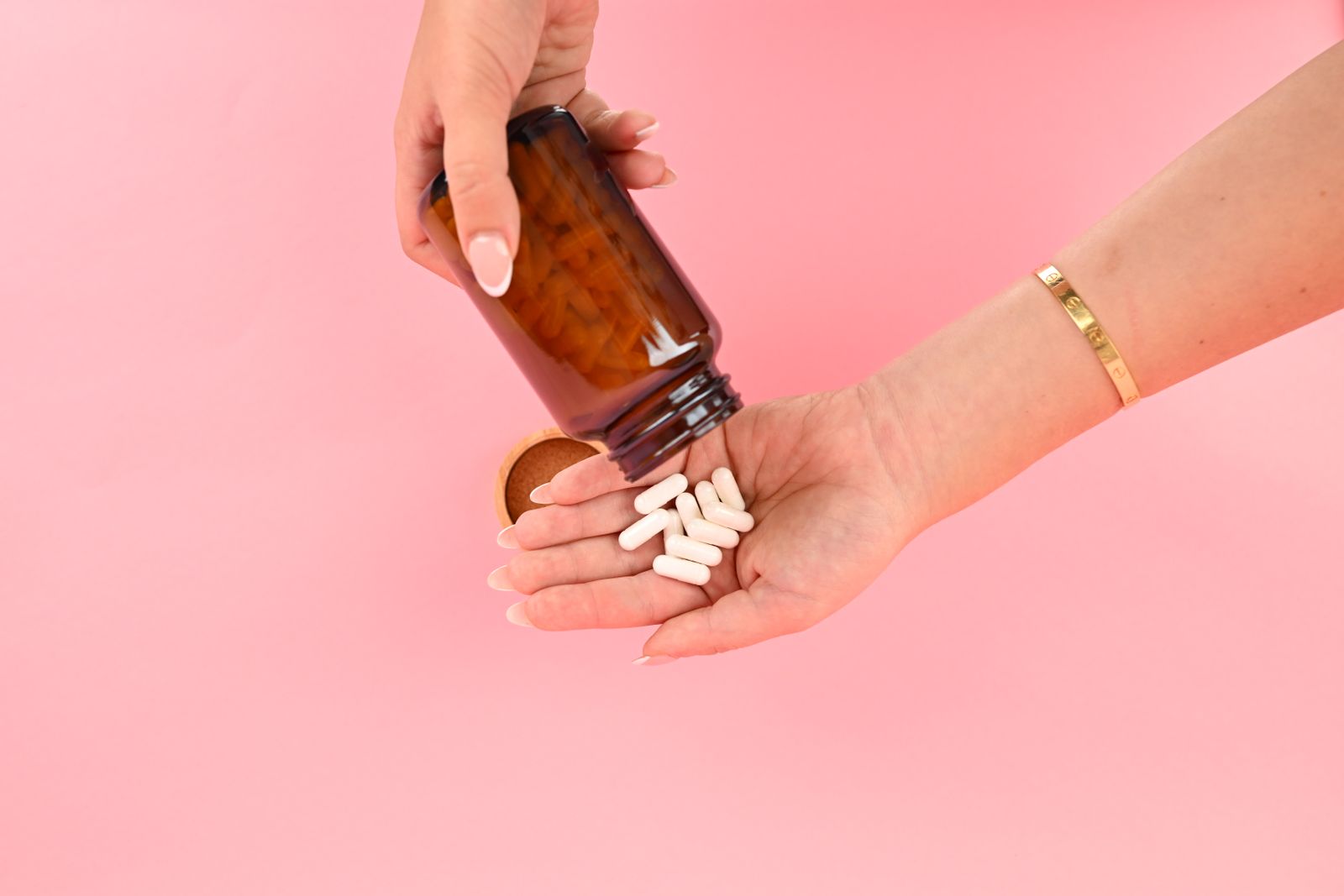
Peptides vs Supplements
Are peptides supplements, and how are they different from vitamins and collagen?
Reviewed by Taylor Anderson, RN
Aesthetic Registered Nurse
Taylor Anderson is an aesthetic registered nurse and a reviewer for Hot or Nothing.
Updated October 30, 2026
Quick answer
Most peptides, including BPC-157 and GLP-1 weight-loss medicines, are drugs that need a prescription. Collagen peptides and vitamins are dietary supplements. The real difference is who checks the product before it reaches you: FDA reviews approved peptide drugs for safety, effectiveness and quality, but does not approve supplements or compounded peptides before sale.
Want your jeans to fit again? See which body options fit you and what they cost.
See My PlanIn this guide
Key takeaways
- Most peptides women ask about, such as BPC-157 and GLP-1 weight-loss medicines, are prescription drugs, while collagen peptides are a supplement you swallow as a powder or drink.
- FDA decides whether a product is a supplement or a drug by what it is for, so a product meant to treat or prevent a disease counts as a drug even if the label says supplement.
- Compounded peptides, which a pharmacy makes to order on your prescription, are not FDA-approved, so ask your clinical team which pharmacy fills your prescription.
- A supplement bottle that says BPC-157 has not been checked by FDA, and products sold online as BPC-157 are unregulated for quality, so you cannot know what is in the vial.
- Our clinical team can prescribe peptides such as semaglutide, tirzepatide, GHK-Cu copper peptide, PT-141, sermorelin or BPC-157 if one fits your goal and health history, and the quiz is where that plan starts.
Most peptides women ask about, such as BPC-157 and GLP-1 weight-loss medicines, are drugs that need a prescription, while collagen peptides and vitamins are dietary supplements that FDA does not approve before they go on sale. The difference between a peptide drug and a peptide supplement is who checks the product before it reaches you. If you want a prescribed peptide for your goal, the quiz at the end of this page is where your plan starts.
Are peptides supplements or drugs?
Most peptides are drugs. A peptide is a short chain of amino acids, the small building blocks that proteins are made of, and your body breaks peptides back down into those amino acids. In the US, peptides made in a lab, including peptides made by engineered cells, are regulated as drugs by FDA's drug center, according to a review of how peptide drugs are developed and regulated.
Collagen peptides are the peptides you see in the supplement aisle. Collagen peptides are collagen broken down into small peptides, sold as a powder or drink you swallow. In one study of collagen peptides and skin, women took them by mouth once a day as a supplement.
FDA draws the line between a supplement and a drug by what the product is for, not by the word on the bottle. FDA says that "in general, even if a product is labeled as a dietary supplement, a product intended to treat, prevent, cure, or alleviate the symptoms of a disease is a drug, and subject to all requirements that apply to drugs."
How are peptides different from collagen and vitamins?
Peptides differ from collagen and vitamins mainly in who checks them before sale and whether you need a prescription. A prescription is your clinical team's order for a medicine. Compounded means a pharmacy makes the medicine to order for you.
| Prescription peptide medicine | Compounded peptide | Collagen peptide supplement | Vitamins | Skincare peptide | |
|---|---|---|---|---|---|
| What it is | An FDA-approved peptide drug, such as the GLP-1 pill Rybelsus, approved in 2019 | A peptide medicine a pharmacy makes to order for you on a prescription | Collagen broken into small peptides, sold as a dietary supplement | A dietary supplement | A peptide you put on your skin, such as GHK-Cu copper peptide in a cream |
| Prescription needed | Yes | Yes | No | No | Our clinical team can prescribe GHK-Cu copper peptide if it fits your skin or hair goal |
| Who checks it before sale (FDA's words) | "FDA's drug approval process for verification of safety, effectiveness and quality" | Not FDA-approved. "FDA does not verify the safety, effectiveness or quality of compounded drugs before they are marketed" | FDA "does NOT have the authority to approve dietary supplements for safety and effectiveness, or to approve their labeling, before the supplements are sold to the public" | Same as collagen: no FDA approval before sale | When prescribed and compounded, same as a compounded peptide: not FDA-approved |
| How you take it | Most peptide drugs are shots. Some are pills, like Rybelsus | In the form your clinical team prescribes | A powder or drink you swallow | Tablets, capsules, powders, gummies or liquids you swallow | On your skin. A cream is not a dietary supplement, because FDA says "supplements are ingested" |
| What to watch for | The side effects on its label, which your clinical team goes over with you | FDA says poor compounding can cause contamination, or too much or too little of the active ingredient | FDA says problems can happen when you combine supplements, mix them with medicines or take too much | Same as collagen: combining supplements, mixing with medicines or taking too much | When compounded, same as a compounded peptide |
For what collagen peptides do for your skin and joints, read does oral collagen help skin and joints.
Is a compounded peptide FDA-approved?
No, a compounded peptide is not FDA-approved. A compounded peptide is made to order by a pharmacy on a prescription, and FDA states that "compounded drugs are not FDA-approved". FDA also says compounded drugs should be used only for patients whose medical needs an FDA-approved drug cannot meet.
Compounding usually happens in state-licensed pharmacies, and state boards of pharmacy oversee those pharmacies day to day. Outsourcing facilities are a separate kind of compounder. FDA inspects outsourcing facilities on a risk-based schedule, and they are held to higher quality standards.
FDA warns that people who buy compounded drugs online, including through telehealth, may not know which pharmacy made them, and tells buyers to research any online pharmacy or telehealth service before using it. Ask your clinical team which pharmacy fills your prescription.
Peptide compounding rules are changing. HHS has a notice titled "Enforcement Discretion Policy Regarding 503A Compounding Using Certain Peptide Bulk Drug Substances", scheduled to publish in the Federal Register on October 30, 2026. Enforcement discretion is about when the government will not act against pharmacies. It is not FDA approval.
Can a supplement label legally say it contains BPC-157?
Nobody at FDA checks a supplement label before it goes on sale, so a bottle that says BPC-157 has not been reviewed by FDA. FDA says supplement companies are responsible for making sure their own products meet safety standards and follow the law, and FDA's role mostly starts after a product is already on the market.
BPC-157 has no FDA-approved use. BPC-157 is also banned in professional sports.
FDA's own risk note on BPC-157 says "the agency lacks sufficient information to know whether the drug would cause harm when administered to humans." FDA also flagged possible immune reactions with some ways of giving BPC-157, and problems with impurities and with confirming what the ingredient is. The nomination to let pharmacies compound BPC-157 was withdrawn, and FDA kept its risk note.
A 2025 systematic review found that products marketed as BPC-157 are unregulated for quality and safety, and many are sold as "dietary supplements" or "research chemicals." That means you cannot know what is in the vial. To tell a real clinic from a research seller, read legitimate peptide clinic vs research seller.
Which kind of peptide fits your goal?
BPC-157 is the peptide people talk about most in the threads we read. We read 81 threads in r/Peptides posted from October 2025 to October 2026, and BPC-157 came up in 39 of them, more than any other peptide we tracked. When one poster asked about cost, a top reply said: "you won't find a cheaper source in Aus, you'll have to go grey market in China and order it from there like the rest of us."
If you want a prescribed peptide, the route is a plan with a clinical team, not a grey-market vial. Our clinical team can prescribe peptides such as semaglutide or tirzepatide for weight, GHK-Cu copper peptide for skin and hair, PT-141 for libido, and sermorelin or BPC-157 for recovery, if one fits your goal and your health history.
If you would rather not inject, read the best peptides without injections. If you want firmer skin from a powder you stir into your coffee, read does oral collagen help skin and joints. For the full set of body and weight treatments, see body treatments.
Take the quiz and tell us what you want: a leaner body, firmer skin, fuller hair, more energy or more desire. Your clinical team then looks at whether a prescribed peptide fits your plan, so you know what you are taking and who prescribed it.
Ready to make a move?
Answer three questions to see the treatment options that fit your goals.
See My PlanFAQ
Is BPC-157 FDA approved?
No, BPC-157 has no FDA-approved use. FDA's risk note on BPC-157 says the agency does not have enough information to know whether it would cause harm in people, and it flagged concerns about impurities and confirming what the ingredient is. Products sold online as BPC-157, often labeled dietary supplements or research chemicals, are unregulated for quality. If you want BPC-157 for recovery, our clinical team checks whether it fits your goal and your health history.
Is collagen a peptide?
Yes, collagen peptides are collagen broken down into small peptides, sold as a powder or drink you swallow. Collagen peptides are sold as dietary supplements, so FDA does not approve them before they go on sale. In a trial of 69 women aged 35 to 55, taking collagen peptides once a day for 8 weeks made skin more elastic than a dummy powder.
Can you take peptides and vitamins together?
Check with your clinical team first, and tell them every vitamin and supplement you take. FDA says problems can happen when you mix supplements with medicines, combine supplements or take too much. FDA also notes that some supplements can interact with medicines or interfere with lab tests.
Are peptide creams the same as peptide injections?
No, a peptide cream goes on your skin, while most peptide drugs are shots. A cream is not a dietary supplement, because FDA says supplements are swallowed. When a peptide cream such as GHK-Cu copper peptide is prescribed and compounded, it is in the same position as a compounded injection: made to order by a pharmacy and not FDA-approved. Our clinical team can prescribe GHK-Cu copper peptide if it fits your skin or hair goal.
Keep reading
Sources (5)
- Development and Regulatory Challenges for Peptide Therapeutics - Doris Zane, Paul L. Feldman, Tomi Sawyer, Zhanna Sobol, Jessica Hawes, 2021 · journals.sagepub.com · captured October 29, 2026
- Oral supplementation of specific collagen peptides has beneficial effects on human skin physiology: a double-blind, placebo-controlled study · pubmed.ncbi.nlm.nih.gov · captured October 29, 2026
- FDA 101: Dietary Supplements | FDA · fda.gov · captured October 29, 2026
- Compounding and the FDA: Questions and Answers | FDA · fda.gov · captured October 29, 2026
- Federal Register :: Public Inspection: Enforcement Discretion Policy Regarding 503A Compounding Using Certain Peptide Bulk Drug Substances · federalregister.gov · captured October 29, 2026