
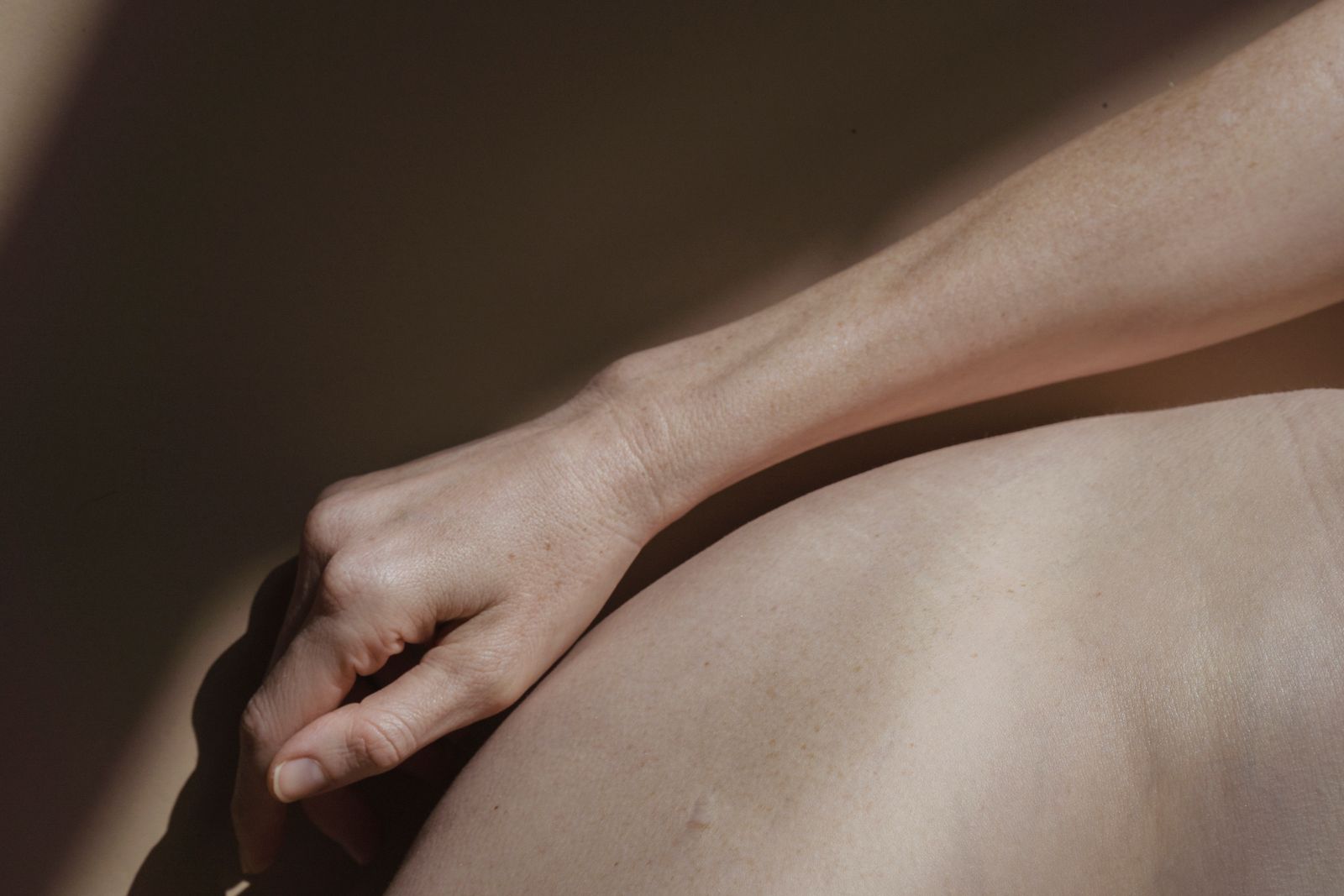
Best Treatments for Crepey Skin on Arms and Body
What are the best treatments for Crepey Arm and Body Skin, and which one fits me?
Reviewed by Taylor Anderson, RN
Aesthetic Registered Nurse
Taylor Anderson is an aesthetic registered nurse and a reviewer for Hot or Nothing.
Updated October 5, 2026
Quick answer
For most women, the best treatment for crepey skin on the arms and body is a retinoid, such as prescription tretinoin or store retinol, used for several months alongside a thick moisturizer. A thick moisturizer makes crepey skin look smoother within days, while a retinoid works slowly on the thin skin underneath, helping it make new collagen, so judge it at around six months. Sculptra injections cost far more, and skin that hangs when you lift your arm needs a surgeon, not a cream.
In this guide
Key takeaways
- A retinoid used for months, paired with a thick moisturizer, is the best first treatment for crepey skin on the arms and body for most women.
- Retinol on older arm skin softened fine crinkling and helped the skin make new collagen, and prescription tretinoin is the stronger, better-studied form of that same ingredient, at a strength your clinical team sets.
- A thick moisturizer smooths crepey skin within days because it adds water, but the change fades when you stop, and store retinol is kept weaker than the strength that changed arm skin.
- Skin that hangs or swings when you lift your arm needs a surgeon consultation, and Sculptra starts at €600 per syringe at one Barcelona clinic, over two to four sessions.
- Start a retinoid a few nights a week, moisturize before and after, expect some peeling in the first month and judge your arms at around six months.
For most women, the best treatment for crepey skin on the arms and body is a retinoid used for months, paired with a thick moisturizer. The moisturizer smooths the crinkly look within days because it adds water. The retinoid works on what sits underneath: thin skin that makes little collagen. In a 24-week study on upper arm skin, retinol reduced fine wrinkling and raised signs of new collagen. Injectables like Sculptra cost far more, and skin that hangs needs a surgeon, not a cream.
What works best for crepey skin on arms?
| Treatment | What it does | The evidence | How long it takes | Rough cost |
|---|---|---|---|---|
| Thick moisturizer or crepe lotion | Adds water to the top layer of skin so it looks smoother | Water keeps the top layer flexible. It does not build collagen | Within days, and it fades when you stop | Varies by brand |
| Body firming cream | Moisturizes and firms | Beat a plain moisturizer on crepey arms in women 40 to 60 | 12 weeks in the study | Varies by brand |
| Store retinol | Turns into tretinoin in your skin | The arm study used 0.4%, above the 0.3% maximum recommended for cosmetic creams | 24 weeks in the arm study | Varies by brand |
| Prescription tretinoin | The active form of retinol, at a strength your clinical team sets | The best-studied retinoid for aging skin, approved for facial wrinkles | Months. Judge it at around six months | $75 every 4 weeks at Pallas Health, clinician care included |
| Collagen peptide drinks | Taken by mouth | Improved crow's-feet and elasticity in a face study. Not tested on arms | 12 weeks in the study | Varies by brand |
| Sculptra injections | Injections for loose arm skin | Offered by clinics for arm laxity. The plan is set after an assessment | 2 to 4 sessions, 4 to 6 weeks apart | From €600 per syringe at one Barcelona clinic |
| Arm lift surgery | Surgery for skin that hangs | The reference treatment when laxity is severe | Ask your surgeon | Ask your surgeon |
Retinol has direct evidence on arm skin. In the arm study, volunteers put 0.4% retinol on one upper inner arm and a plain lotion on the other, up to three times a week for 24 weeks. The retinol arm had less fine wrinkling and more new collagen than the other arm. It also had 40% more glycosaminoglycans, molecules in the skin's support layer. The volunteers were 80 or older.
Retinol works because your skin turns it into retinoic acid, which is tretinoin. Tretinoin is the best-studied retinoid for aging skin and is approved as a prescription medicine for facial wrinkles. Its track record comes from the face. On your arms, it's the stronger, better-studied form of the same ingredient that worked in the arm study.
That doesn't make tretinoin better than retinol. In a 12-week split-face trial of 65 people, retinol at 0.25% to 1% and tretinoin at 0.025% to 0.1% both improved wrinkles, with no statistically significant difference between them. What tretinoin gives you is strength in a small amount, plus a clinician who sets the dose.
Body firming creams have a study on arms, too. In a trial of 40 women aged 40 to 60 with mild to moderate crepiness and looseness on their upper arms, a firming moisturizer used twice a day for 12 weeks beat a plain moisturizer on every skin measure. Ultrasound showed denser skin.
Collagen drinks have been tested on the face, not the arms. In one placebo-controlled study, 1,000 mg a day of fish collagen peptide for 12 weeks improved crow's-feet wrinkle scores and skin elasticity. The study's authors include the company that supplies the collagen.
On cost, Pallas Health charges $75 per 30 g jar every 4 weeks for compounded prescription creams, including tretinoin formulas for fine lines, with clinician care included. Sculptra costs far more. Clínica Provença in Barcelona lists its arm laxity treatment from €600 per syringe. It plans two to four sessions spaced four to six weeks apart, and sets the number of syringes and the final cost after an individual assessment.
Why does crepey skin look better right after lotion?
Water in the top layer of your skin keeps it flexible. When that layer dries out, it stiffens, and the fine crinkles show more. A thick moisturizer puts water back, so crepey skin looks smoother fast.
That change is real, but it's water, not new collagen, and it fades when you stop. Aging skin makes very little collagen on its own. In the arm study, the volunteers' skin showed almost no procollagen I (the raw material for new collagen) before treatment. A cream that only moisturizes can't change that. The retinol arm's collagen gains were measured at 24 weeks, which gives you the timescale for the deeper change.
Store retinoids are kept weak on purpose. The maximum recommended retinol level in cosmetic creams is 0.3%, below the 0.4% used in the arm study. For retinyl palmitate in body lotions, the recommended level is 0.05%, and even 0.6% retinyl palmitate is only half as active as 0.25% retinol. Cosmetic retinoid products also don't have to pass rigorous safety or efficacy testing before they go on sale. If you want the strength that changed arm skin in the study, a prescription is one way to get it.
Which crepey skin treatment is right for me?
| Your situation | Your first move |
|---|---|
| Skin looks crinkly when it's dry and better after lotion | A thick moisturizer every day, then ask about a retinoid for lasting change |
| Fine crepey texture on your arms, chest or legs, and you want it to improve over months | A prescription retinoid such as tretinoin through your clinical team |
| You want a bigger change, have the budget and don't mind injections and several clinic visits | A Sculptra consultation |
| Skin hangs or swings when you lift your arm | A surgeon consultation |
Crepey skin can stay after big weight loss, even if you train hard. One woman put it this way: "I lost over 60 lbs on a calorie deficit while lifting weights and I still struggle to like my skin."
Loose, hanging skin is a different problem from crepey texture. Clínica Provença, which sells Sculptra for arms, says that when laxity is severe, an arm lift remains the reference treatment, and Sculptra does not replace surgery when you need surgery.
For fine crepey texture, tretinoin is one of the treatments our clinical team prescribes. If it fits your goal, your clinical team chooses the strength for the skin you want to treat.
How do I start tretinoin or retinol on my arms?
- Expect some redness, peeling and flaking at first. It usually shows up in the first month. Doctors call this retinization. It's the retinoid changing how the top layer of your skin renews, not a sign that it's failing.
- Moisturize before, during and after you start. In a study, a barrier moisturizer used this way helped skin adjust to a retinoid with less water loss and better hydration.
- Start a few nights a week. In the arm study, retinol went on up to three times a week, Monday, Wednesday and Friday. When skin got irritated or too dry, treatment paused for a session or more until it settled.
- Let your clinical team set the strength. Tretinoin is about ten times stronger than retinol. Tell your clinical team how your skin reacts so they can adjust.
- Give it months, not weeks. Take photos of your arms in the same light now and every month, so you can see slow change. Judge the routine at around six months.
Take the quiz so your clinical team can see whether prescription tretinoin fits your arms, your skin and the smoother texture you want.
Ready to make a move?
Answer three questions to see the treatment options that fit your goals.
See My PlanFAQ
Can you use tretinoin on your arms and legs?
Yes, tretinoin can go on your arms and legs, and your clinical team sets the strength for the skin you want to treat. Most of tretinoin's track record comes from the face, but it is the stronger, better-studied form of retinol, which smoothed fine crinkling and helped older arm skin make new collagen. Start a few nights a week, moisturize before and after, and expect some redness and peeling in the first month.
Can crepey skin on arms be reversed?
Crepey texture on the arms can improve, but it takes months and depends on whether the skin is crinkly or hanging. A retinoid used over about six months helped older arm skin show less fine crinkling and make new collagen, and a body firming moisturizer improved crepey upper arms in women aged 40 to 60 after 12 weeks. Skin that hangs or swings when you lift your arm is a different problem, and a surgeon is the person to see.
Does collagen powder help crepey skin?
Nobody knows yet whether collagen helps crepey arm skin, because it has not been tested on arms. A daily fish collagen peptide drink taken for 12 weeks improved crow's-feet wrinkles and skin elasticity on the face, in research that included the company supplying the collagen. For your arms, a retinoid and a thick moisturizer have more direct support.
How much does Sculptra for arms cost?
Sculptra for arms starts at €600 per syringe at Clínica Provença in Barcelona, which plans two to four sessions spaced four to six weeks apart. The clinic sets the number of syringes and the final cost after an individual assessment, so your total depends on your skin. That makes Sculptra far more expensive than a retinoid cream, and the clinic says it does not replace surgery when skin hangs.
Keep reading
Sources (5)
- Improvement of Naturally Aged Skin With Vitamin A (Retinol) · jamanetwork.com · captured October 5, 2026
- A Randomized, Double-Blind, Split-Body, Placebo-Controlled Clinical Study to Evaluate the Efficacy and Tolerability of a Topical Body Firming Moisturizer for Upper Arm Rejuvenation · pubmed.ncbi.nlm.nih.gov · captured October 5, 2026
- Oral Intake of Low-Molecular-Weight Collagen Peptide Improves Hydration, Elasticity, and Wrinkling in Human Skin: A Randomized, Double-Blind, Placebo-Controlled Study · mdpi.com · captured October 5, 2026
- Use of Retinoids in Topical Antiaging Treatments - PMC - NIH · pmc.ncbi.nlm.nih.gov · captured October 5, 2026
- Compounded Prescription Skincare Online — $75/mo | Pallas Health · pallashealth.co · captured October 5, 2026