
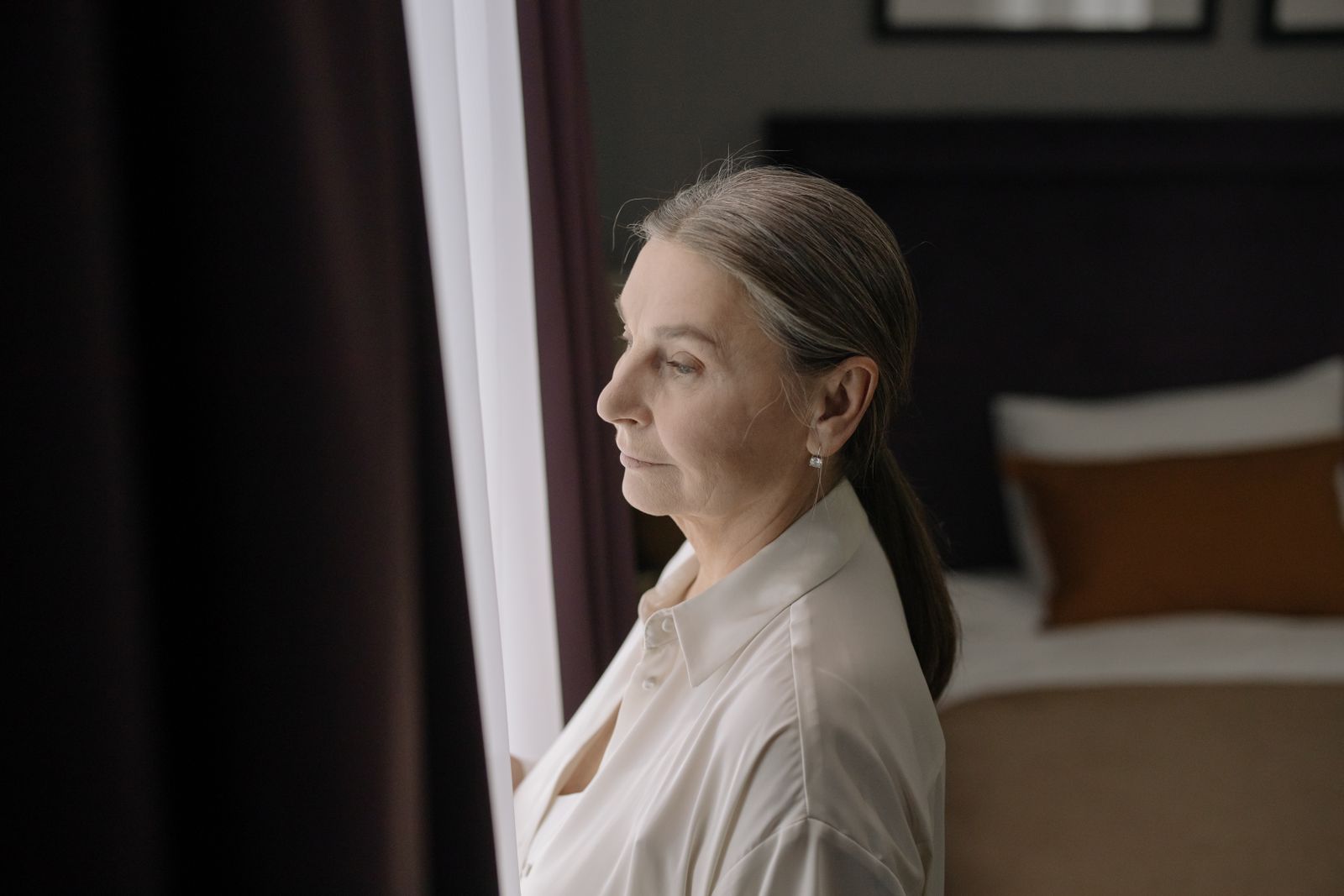
Best Non-Surgical Skin Tightening Treatments for Women Over 40, and Which One Fits You
What are the best non-Surgical Skin Tightening Treatments for Women Over 40, and which one fits me?
Reviewed by Taylor Anderson, RN
Aesthetic Registered Nurse
Taylor Anderson is an aesthetic registered nurse and a reviewer for Hot or Nothing.
Updated October 3, 2026
Quick answer
Microfocused ultrasound, the energy Ultherapy uses, has the most research among these sources for mild to moderate looseness along the lower face and under the chin, and radiofrequency suits women willing to return for a series of sessions. Morpheus8 fits if you can plan around a few days of redness, and heavier or hanging neck skin needs a clinician's assessment before you book.
In this guide
Key takeaways
- Results from one device don't automatically carry over to another brand, so ask the clinic which type of energy its device uses and which published studies support it for the area you want treated.
- Morpheus8 estimates of $1,200 to $4,500 cover a three-session series, while Sofwave's $1,500 to $3,000 covers one full-face session, so ask each clinic for the total cost of the full course it recommends.
- A daily low-molecular-weight collagen peptide improved hydration, wrinkles and elasticity in a placebo-controlled trial, which makes it a fit for skin that looks drier and more lined than loose rather than a replacement for a device.
If your skin has started to loosen along your jaw, cheeks or under your chin, the non-surgical options most women ask about are in-office energy devices such as Ultherapy, Sofwave, Thermage FLX and Morpheus8. The studies behind this guide don't name a single best device. They test two types of energy, microfocused ultrasound and radiofrequency, and none of them compares these brands against each other. Your best fit depends on how loose your skin is, which area bothers you, how much recovery time you can take and what you want to spend.
Which in-office treatment matches how loose your skin is?
Microfocused ultrasound focuses ultrasound energy beneath the skin's surface. A systematic review of microfocused ultrasound for facial tightening found 16 studies that met its criteria, and every one involved female patients. A 2023 randomized trial tested a newer microfocused ultrasound device for both safety and tightening on the middle face, the lower face and the area under the chin.
Radiofrequency is a form of energy that warms tissue. A 2026 radiofrequency study gave adults with mild to moderate facial looseness three full-face sessions four weeks apart and tracked changes in their facial contour and skin elasticity through week 20. It was a small study of 30 people, 26 of whom completed follow-up, and it had no untreated comparison group.
These studies test particular devices, so their results don't automatically carry over to a different brand. Before you book, ask the clinic which type of energy its device uses and which published studies support it for the area you want treated. Then narrow your choice this way:
- Mild to moderate looseness in the lower face or under the chin: start by asking about microfocused ultrasound, the device type with the most research among these sources.
- Willing to come back for a series: radiofrequency was studied as three sessions a month apart.
- Able to plan around a few days of redness: Morpheus8 is an option. Its recovery estimate is in the cost section below.
- Heavier sagging or hanging skin on your neck: the radiofrequency study enrolled people with mild to moderate looseness, so it doesn't show how heavier sagging responds. Have a clinician assess your skin before you book a device.
Can a collagen supplement firm skin from the inside?
In a 2018 double-blind trial, 64 adults aged 40 to 60 took either 1,000 mg of a specific low-molecular-weight collagen peptide (collagen broken into small fragments) or a placebo every day for 12 weeks. Double-blind means neither the participants nor the researchers knew who was taking the real product. By week 6, the collagen group had better skin hydration than the placebo group, and the difference held at week 12. At 12 weeks, the collagen group also had better wrinkle measurements, better scores when assessors rated the skin by eye, and higher readings on two of three elasticity measures. No one in the trial had side effects from the collagen during those 12 weeks. The published summary doesn't say how many participants were women. The trial was small and tested one product, so it doesn't show how other collagen supplements perform.
The trial measured hydration, wrinkles and elasticity. It did not test whether loose skin along the jaw lifted, so collagen is a separate option rather than a replacement for a device if sagging is your main concern. It suits you if your skin looks drier and more lined than loose, or if you want an easy daily option aimed at hydration, wrinkles and elasticity. The trial compared collagen with a placebo on its own, so it doesn't show whether collagen adds to a device's results, works well alongside one, or helps skin recover after treatment.
What does skin tightening cost, and how much downtime should you plan for?
No clinic price lists were available for this guide. Third-party treatment guides gave price estimates for only two devices, Morpheus8 and Sofwave, and only the Morpheus8 guide gave a recovery window. Treat these figures as estimates rather than quotes, and ask Ultherapy and Thermage FLX providers for their own prices and recovery times.
- Morpheus8: A MedSpa Directory cost guide published April 29, 2026, puts a three-session series at $1,200 to $4,500 in the US. It lists 3 to 5 days of redness and minor pinpoint marks after treatment.
- Sofwave: An AestheticMedGuide cost guide published May 30, 2026, puts a full-face session at $1,500 to $3,000, depending on provider and location.
Morpheus8 is priced here as a three-session series and Sofwave as a single session. When you compare quotes, ask each clinic for the total cost of the full course it recommends for your face.
If you'd like a doctor-led plan for your skin, take the Hot or Nothing quiz. It asks about your skin goals and points you toward a plan that fits them. Hot or Nothing's skin plans include tretinoin, GHK-Cu copper peptide and NAD+ face cream. Medications are prescribed through doctors, and the clinical partner provides the offer and pricing.
Ready to make a move?
Answer three questions to see the treatment options that fit your goals.
See My PlanFAQ
Which non-surgical skin tightening treatment has the most research?
Among the studies behind this guide, microfocused ultrasound, the energy Ultherapy uses, has the most research, including a systematic review of facial tightening in women. None of the studies compares Ultherapy, Sofwave, Thermage FLX and Morpheus8 against each other.
How much downtime does Morpheus8 need?
A third-party cost guide lists 3 to 5 days of redness and minor pinpoint marks after Morpheus8. Recovery estimates for Ultherapy, Sofwave and Thermage FLX weren't available for this guide, so ask each provider directly.
How much does non-surgical skin tightening cost?
Third-party guides estimate $1,200 to $4,500 for a three-session Morpheus8 series in the US and $1,500 to $3,000 for one full-face Sofwave session. Prices for Ultherapy and Thermage FLX weren't available, so ask each clinic for the total cost of the full course it recommends.
Can a collagen supplement tighten loose skin?
A 12-week trial of a low-molecular-weight collagen peptide improved skin hydration, wrinkle measurements and elasticity compared with a placebo, but it did not measure whether loose skin along the jaw lifted. If sagging is your main concern, treat collagen as a separate option rather than a replacement for an in-office device.
Keep reading
Sources (12)
- A Systematic Review of the Efficacy of Microfocused Ultrasound for Facial Skin Tightening · johanjansma.nl · captured October 3, 2026
- Oral and topical peptides for skin aging: systematic review and meta-analysis of randomized controlled trials · public-pages-files-2025.frontiersin.org · captured October 3, 2026
- Sculptra vs Radiesse: Collagen Stimulator (Board-Certified… · medspadirectory.skin · captured October 3, 2026
- Evaluation of a Novel Microfocused Ultrasound with Three‐Dimensional Digital Imaging for Facial Tightening: A Prospective, Randomized, Controlled Trial | Dermatology and Therapy | Springer Nature Link · link.springer.com · captured October 3, 2026
- Oral Intake of Low-Molecular-Weight Collagen Peptide Improves Hydration, Elasticity, and Wrinkling in Human Skin: A Randomized, Double-Blind, Placebo-Controlled Study. · pubmed.ncbi.nlm.nih.gov · captured October 3, 2026
- Morpheus8: Cost, Results & Recovery Guide | MedSpa Directory · medspadirectory.skin · captured October 3, 2026
- Low-molecular-weight collagen peptides supplement promotes a healthy skin: A randomized, double-blinded, placebo-controlled study · onlinelibrary.wiley.com · captured October 3, 2026
- Ultherapy vs Sofwave vs Thermage: ultrasound and RF skin tightening compared. · AestheticMedGuide · aestheticmedguide.com · captured October 3, 2026
- Efficacy and Safety of Intelligent Microfocused Ultrasound in Lifting Facial Laxity: A Multicenter, Prospective, Randomized, Split‐Face Study - Shen - 2026 - Journal of Cosmetic Dermatology - Wiley Online Library · onlinelibrary.wiley.com · captured October 3, 2026
- Influence of collagen peptide supplementation on visible signs of skin and nail health and ‐aging in an East Asian population: A double blind, randomized, placebo‐controlled trial - Vleminckx - 2024 - Journal of Cosmetic Dermatology - Wiley Online Library · onlinelibrary.wiley.com · captured October 3, 2026
- Sofwave Cost: Pricing by Area and How It Compares · AestheticMedGuide · aestheticmedguide.com · captured October 3, 2026
- Facial contour modulation and skin tightening using 40.68-MHz unipolar radiofrequency | Lasers in Medical Science | Springer Nature Link · link.springer.com · captured October 3, 2026